Sri Lanka is small on the map, but don’t underestimate how long the travel days can end up being. Roads are slow, trains sell out on key legs, and the best option changes depending on luggage, kids, and your timetable. In this guide, we’ll show you how to choose the right transport for your trip, compare trains vs. buses vs. tuk-tuks vs. drivers, and set you up with booking steps that actually work for first-timers – especially couples and families who want fewer surprises and more confidence.
Summary: Choose Your Transport in 60 Seconds
For most independent travellers, the best way to get around Sri Lanka is a mix: use trains for scenic hill-country routes, buses for budget hops, and PickMe-style tuk-tuks/taxis for short rides in towns. Add a private driver when you have tight timelines, lots of luggage, or family-friendly comfort needs.
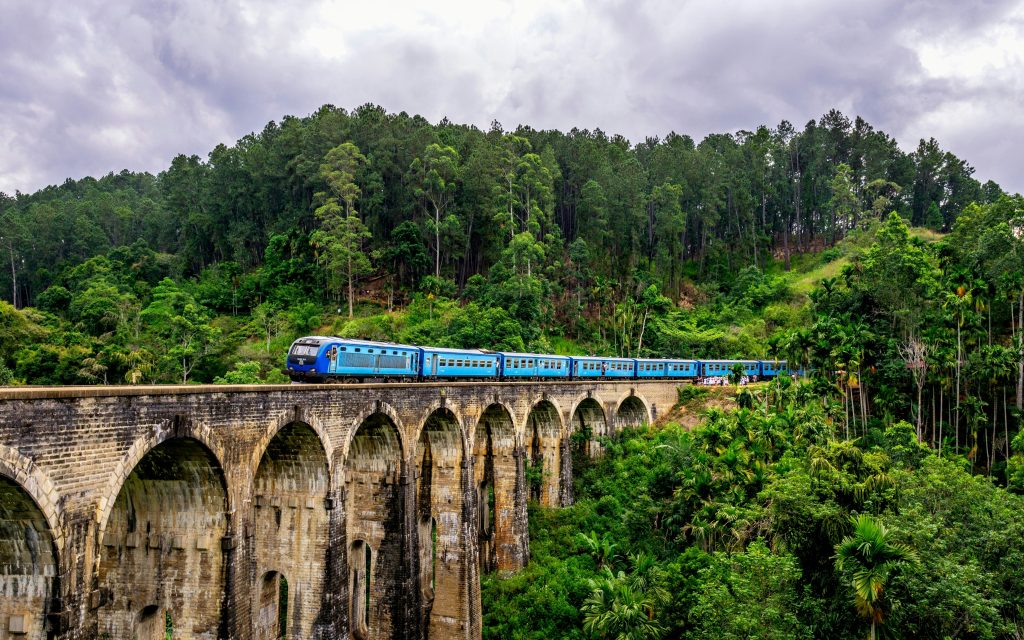
- If you want the classic scenic experience (and you can handle delays): pick trains, especially in the hill country (Note: As of writing, the famous Kandy to Ella is not operating as they rebuild after 2025’s floods). If you need reserved seats, book within the official window (details below).
- If your priority is cheapest point-to-point: use buses (walk-up for short hops; reserve seats for certain long-distance services).
- If you’re moving inside towns (or doing short jumps): use tuk-tuks/taxis via an app where possible for clearer pricing. While Uber exists in a few cities, PickMe is Sri Lanka’s main ride-hailing app and provides upfront fare estimates in-app for easier, less haggly trips.
- If you have kids, lots of luggage, surfboards, or a tight schedule: a private driver often wins on simplicity alone (door-to-door, stops, less admin). With enough people, the cost-value ratio can get quite strong – because you’re splitting one fixed price across the group, while saving time, transfers, and hassle. You can book one via Viator here.
- If you plan to drive yourself: factor in the local permit process and fees (don’t assume an overseas licence alone is enough). Also, don’t underestimate the chaos – traffic flow, road rules, and driving behaviour can feel far less predictable than in many Western countries, so only self-drive if you’re genuinely confident behind the wheel (Note: Danushi and I have never attempted this ourselves and her parents, who learnt to drive in Sri Lanka, no longer feel confident driving there now that they’ve adapted to Australian roads).
Tip: In Sri Lanka, transport time can swing wildly with traffic, rain, and roadworks. Build buffer into any “same-day” travel plan.
Quick Comparison Table: Train vs. Bus vs. Tuk-tuk vs. Driver
| Mode | Cost | Comfort | Speed | Flexibility | Best for |
| Train | Low | Medium (can be crowded) | Medium-slow | Low-medium | Scenic legs, budget travel, solo/couples who can go with the flow |
| Bus | Very low-low | Low-medium | Medium | Medium | Cheap hops, direct routes, travellers okay with a “local” ride |
| Tuk-tuk / taxi | Low-medium (short rides) | Medium | Fast in towns | High | Short distances, last-mile connections, station-to-hotel |
| Private driver | Medium-high | High | Medium-fast | Very high | Families, bigger groups, luggage-heavy trips, multiple stops, tight timelines |
Travel in Sri Lanka is a balance. The “cheap” modes (train/bus) save money, but can cost you time/energy. The “easy” mode (driver) saves hassle, but costs more. Keep reading on for a more in-depth overview on transport options.
Transport Options Overview
Trains (i.e., Sri Lanka Railways)
Sri Lanka’s trains are best thought of as a scenic travel experience rather than a precision transport system – especially in the hill country (for where trains are the source of many iconic photos). They’re great value and memorable, but comfort and punctuality can vary, so a little planning goes a long way.
- Best for: hill-country scenery + relaxed travel days.
- How reservations work (official rules):
- Online reservations can be made up to 30 days before travel, and no later than 2 hours before departure. Note: when the Kandy to Ella service runs, it often sells out on opening.
- You must enter NIC/passport details for all passengers to complete a booking.
- You can’t choose specific seats – they’re allocated automatically.
- A 5% convenience fee applies to online reservations.
- There’s no physical ticket issued for online reservations – your e-ticket (printed or on your phone) is accepted.
- Where to check schedules: Sri Lanka Railways’ online schedule tool (also notes it can show ticket prices according to the search criteria).
Tip: If reserved seats are sold out, you can often still travel on unreserved classes – just expect crowds, especially on popular routes.
Buses (State-owned SLTB + Private)
Buses are Sri Lanka’s workhorse transport: they go almost everywhere and are usually the cheapest way to move between towns. The trade-off is comfort and predictability – service quality varies widely by route, operator, and time of day.
- Best for: budget travellers, direct routes, and short-to-medium hops.
- Reservations (when it matters): for some longer-distance services, seat reservation platforms exist. SLTB’s eSeat site promotes online booking and a 24/7 hotline (1315), including an FAQ confirming you can reserve by calling 1315.
Watch out with buses, though. Bus comfort varies a lot by service and time of day. If you’re travelling with kids or you get motion-sick, best to plan fewer long bus days.
Tuk-tuks & Taxis (Street vs. App)
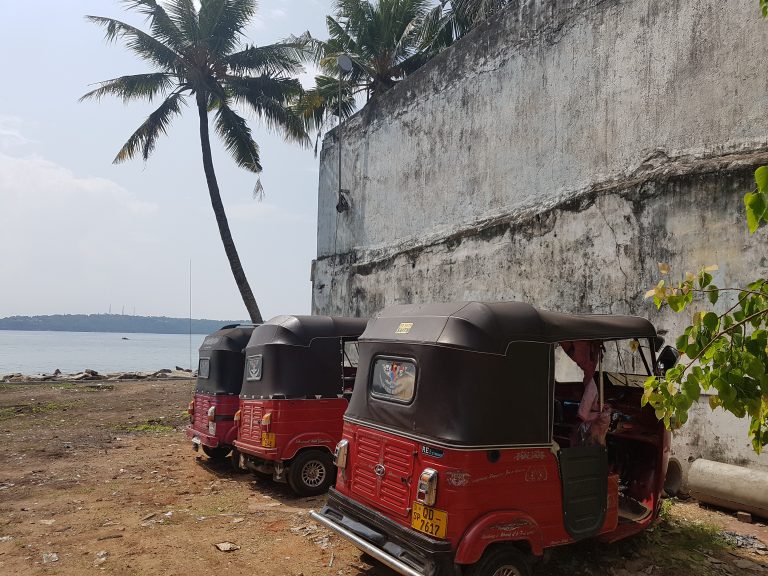
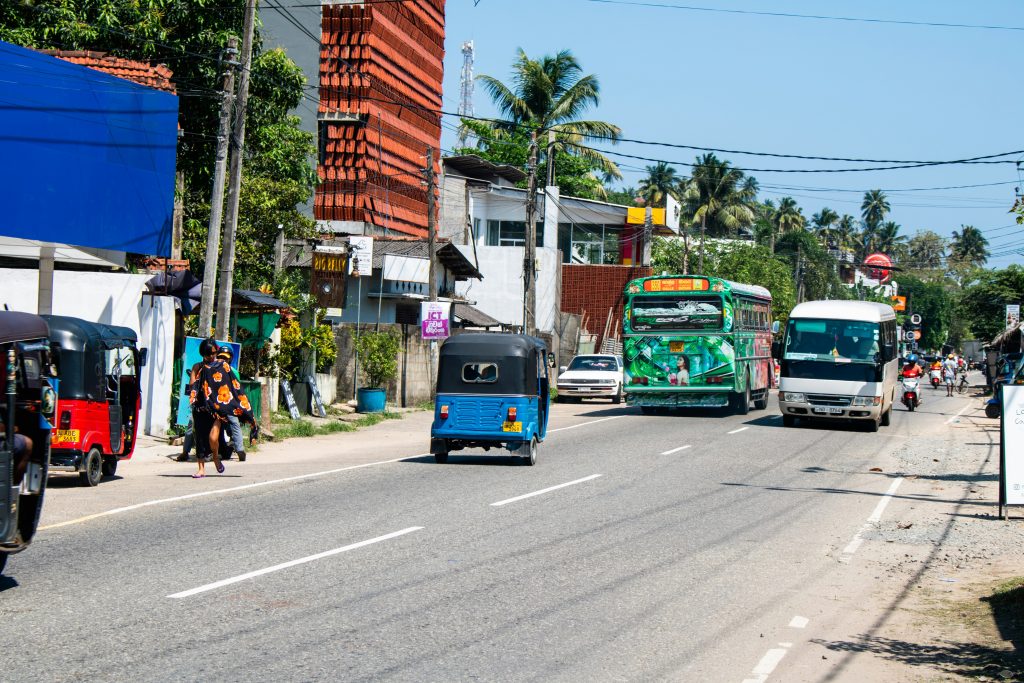
Tuk-tuks and taxis are your short-distance travel solution – perfect for station-to-hotel, beach-town hops, and quick errands. Tuk-tuks are also just a fun experience for those who have never been in one. Prices can be inconsistent on the street, so apps (where available) help reduce negotiation and surprise mark-ups.
- Best for: short trips – station to hotel, dinner runs, beach-town hops.
- Apps: PickMe is a mainstream option and explicitly provides fare estimates in-app.
- Uber: Uber’s own Sri Lanka cities page lists availability in Beruwala, Colombo, and Negombo (coverage can be limited outside those areas).
- Pricing reality: If you’re not using an app, agree the price first or use a working meter.
Tip: In busy areas, apps can reduce the fatigue and frustration that can sometimes come with negotiations – especially when you’re tired, sweaty, and carrying bags.
Private Drivers (Day Hire + Transfers)
Private drivers are the lowest-friction option for families, bigger groups, luggage-heavy trips, or itineraries with multiple stops. You’ll pay more, but you buy back time, energy, and simplicity – especially on routes that are slow or messy by public transport (which is quite common).
- Best for: families, heavy luggage, tight schedules, multi-stop days (e.g., temple + viewpoint + hotel), and routes where public transport becomes multi-leg and slow.
- How it usually works: you can book point-to-point transfers (city A → city B), or day hire (driver waits while you sightsee).
- How to proce-check (practically): best to get 2-3 quotes, confirm what’s included (e.g., fuel, tolls, driver meals/accommodation if relevant), and clarify whether the price is per vehicle or per person. For ease and convenience, you can book a private driver via Viator here.
- What to confirm before paying a deposit:
- vehicle type + seatbelts (especially if travelling with kids)
- start time + pickup point + baggage capacity
- whether stops are included (and how many)
- cancellation terms (even informal ones)
- Reality check: drivers can be the easiest option, but travel times still vary with traffic and rain – so “door-to-door” doesn’t always mean “fast.”
Tip: For long travel days with kids, we’d treat a driver as your “stress insurance” – you’re paying to remove the uncertainty and stress.
Driving Yourself (Permits + Reality Check)
Self-driving is possible, but it’s not the default choice for most visitors because the permit process, road conditions, and driving culture can feel intense. If you do it, treat it like a commitment: get the paperwork right, drive defensively, and assume travel times will be slower than expected.
- Start with the IDP: An International Driving Permit (IDP) is usually a translation/companion document to your home licence. Official IDPs translate your valid domestic driver’s licence and allow you to legally drive in over 150 countries.
- The practical reality for travellers: While Sri Lanka’s Motor Traffic law sets conditions for recognising an IDP, in addition, travellers are also commonly required to obtain a recognition/covering permit in Sri Lanka before driving or hiring vehicles in Sri Lanka. Covering most circumstances, motoring guidance indicates that you must get a recognition permit from the Automobile Association of Ceylon to drive/ride in Sri Lanka with your foreign licence + IDP.
- Another official option is a temporary Sri Lankan licence: The Sri Lanka Department of Motor Traffic publishes fees for issuing a temporary driving licence to a visitor, often accessible on-arrival. The conditions around these licenses seem to continue to be the subject of discussion and change, and so ensure you look up most current guidance if you plan to take this route.
- Assume requirements and fees can change: Always re-check the latest rules close to travel and confirm what your rental company and insurer will accept.
What does this all mean practically speaking? For most travellers, don’t rely on “IDP = done.” Plan on home licence + IDP + Sri Lanka recognition/temporary permit, and keep copies (digital + paper) with you.
If you’re feeling adventurous, renting your own tuk-tuk is a unique way to experience Sri Lanka. Companies like TukTuk Rental make the process relatively straightforward for travellers, helping with permits, insurance, and a quick driving lesson before you hit the road. It gives you complete flexibility and can be a fun, memorable way to explore at your own pace but it’s best suited to confident, patient drivers who are comfortable navigating Sri Lanka’s busy and sometimes unpredictable roads.
Route Cards: Sri Lanka’s Key Travel Legs
These route cards cover Sri Lanka’s most common traveller legs, with the best transport choice first – plus realistic time ranges, costs, and simple booking steps. Prices and travel timeframes below are indicative ranges only. Fares and driver quotes can vary by season, demand, fuel costs, vehicle type, and where you book – so treat them as a guide and double-check close to travel.
Colombo/Negombo to Kandy
Best option + why: For most travellers, the Train (Colombo Fort to Kandy or vice versa) is straightforward, usually faster than the bus, and less tiring. That said, if you’re landing at the airport/Negombo with luggage or kids, a private transfer can be the simplest door-to-door choice.
Time range: Train ~2h 30m; Drive/transfer ~2h-2h 15m; Bus ~4h 10m (traffic can stretch this).
Cost range: Train LKR1,200-3,900; Bus LKR400-1,200 (varies by service class); Taxi/transfer LKR15,000-38,000 (Negombo tends to be cheaper than central Colombo quotes).
See ‘Transport Options Overview’ above for booking steps for trains.
What to look out for:
- With kids, we’d bias toward reserved seats on trains (when available) or a private transfer if you’re arriving straight off a flight.
- For a private transfer, book through your accommodation or a reputable operator and confirm total price + luggage space in advance.
- Watch out: “Fast” and “on time” are not guarantees – pad your schedule, especially if you have a same-day connection.
- Reserved seats on popular departures can sell out quickly once the window opens (book as soon as your dates are firm).
- Comfort/reality note: Trains can be crowded at commuter times; buses are cheap but can feel long and packed.
- If you’re using a tuk-tuk/taxi at either end, app-based fares (e.g., PickMe) can reduce negotiation friction.
Kandy to Ella
Note: As at the time of updating article, the train line from Kandy to Ella is not currently operating due to landslides. There is not currently a solid ETA on when this line will return to operation, and so check for the most updated information via Sri Lanka Railways before planning around this.
Best option + why: Train. This is the classic hill-country leg where the journey is the point – easy planning, big scenery payoff, and generally better value than a private car for most couples.
Time range: Direct trains typically ~5h 45m to ~9h 55m depending on the service and day (average shown around ~7h+).
Cost range: Roughly LKR1,300-1,900 (2nd class), LKR1,300-1,600 (3rd class), up to LKR2,600-5,000 (A/C options, where available).
See ‘Transport Options Overview’ above for booking steps for trains.
What to look out for:
- Comfort/reality notes: Expect crowds, open windows/doors on some carriages, and occasional delays. Reserved seats reduce stress; unreserved can mean standing for long stretches.
- Family/kids note: If travelling with younger kids, prioritise reserved seating or consider splitting the journey with a stop (e.g., Nuwara Eliya area) to avoid a mega day.
- Watch out: Don’t plan a tight same-day onward connection – this route can run late.
- Bring layers: hill-country trains can feel cool, especially with open windows.
- Keep children well back from open doors/windows and skip the “lean-out photo” culture.
Ella to South Coast (Mirissa/Weligama/Unawatuna)
Best option + why: Private transfer/driver for most first-timers. There’s no direct train to the south-coast beach towns, and public routes often mean long travel days with changes – fine on a budget, but not the easiest with luggage.
Time range:
- Private transfer: ~3.5h to ~4h 15m is a realistic planning range (some planners show faster drive times, but allow buffer).
- Bus (with changes): commonly ~8h-9h+ depending on the routing.
- Train (with transfers via Colombo/Maradana): ~13h is a typical “planner” duration.
Cost range:
- Private transfer: roughly LKR16,000-35,000+ depending on vehicle and provider.
- Bus (with changes): roughly LKR4,500-9,500 depending on route and service.
- Train (with transfers): roughly LKR1,600-14,000 depending on class and legs.
Booking steps:
- Based on the above time and cost range, decide if you’re optimising for time/comfort (driver) or budget (bus/train with changes).
- For a private transfer, book via your accommodation or a reputable operator (or save the hassle and book a private driver via Viator here); confirm pickup time, vehicle size, luggage capacity, and whether breaks are included.
- If going public, ask in Ella for the most current bus routing to Matara/Galle, then connect onward by local bus/tuk-tuk to Mirissa/Weligama/Unawatuna.
- If attempting train, plan it as a multi-leg day (Ella → Colombo/Maradana area → south-coast line) and keep expectations flexible.
What to look out for:
- Comfort/reality notes: Public transport here is doable, but it’s the leg most travellers describe as “a full travel day.” A driver turns it into a simple transfer and protects your energy for the beach.
- Family/kids note: With kids (or lots of luggage), this is one of the clearest cases where a driver is worth the money – fewer transfers, fewer meltdowns, and you arrive less wrecked.
- Watch out: Don’t underestimate this leg if you’re going public – start early and assume delays.
- If you’re quoted a very low transfer price, clarify vehicle type, A/C, and whether it’s a shared ride.
- If you use tuk-tuks at the coast end, app-based fares can help avoid inflated “tourist pricing.”
Colombo to Sigiriya/Dambulla
Best option + why: For most travellers, bus to Dambulla + quick onward hop to Sigiriya is the simplest budget play (frequent departures). If you want fewer moving parts (or you’ve got kids + luggage), a taxi/driver is the easiest door-to-door option.
Time range: Bus ~4h 10m-4h 30m (Colombo → Dambulla, then onward); Train ~3h 30m-4h (Fort → Habarana + onward); Taxi/driver ~2h 30m.
Cost range: Bus ~LKR510-1,800 (depends on service class + onward connection); Train (incl. onward transfer range shown) ~LKR2,355-7,863; Taxi/driver ~LKR45,000-55,000.
Booking steps:
- For buses, start at Colombo Bastian Mawatha Bus Terminal for Dambulla services.
- For trains, check Fort Station → Habarana options (then connect onward by local transport). See ‘Transport Options Overview’ above for booking steps for trains.
- For a taxi/driver, get a written quote that confirms total price, A/C, and luggage capacity.
What to look out for:
- Comfort/reality notes: This is a “core tourist corridor,” so it’s popular – and delays happen. Bus comfort varies (standard vs semi-lux vs super-lux).
- Family/kids note: If you’re travelling with small kids (or planning a sunrise start), a driver can be worth it just for predictable timing and fewer transfers.
- Watch out: If you bus to Dambulla, you still need an onward connection to Sigiriya – factor that into time and cost.
- Don’t plan a tight same-day “temple + Lion Rock + transfer” combo unless you’re using a driver.
- If you take the train route, remember it’s Fort → Habarana + onward, not a train direct to the rock.
Cultural Triangle to Trincomalee/East Coast
Best option + why: Direct bus (Dambulla to Trincomalee) is the practical default – they’re frequent, cheap, and shown as a direct service. For comfort and speed, a taxi/driver is the easiest upgrade.
Time range: Bus ~2h 50m; Taxi/driver ~1h 45m-1h 50m.
Cost range: Bus ~LKR380-2,300 (standard to higher-end services); Taxi/driver ~LKR12,000-15,000.
Booking steps:
- If you’re starting in Sigiriya/Habarana, get to Dambulla first (it’s the common hub for east-coast buses).
- Take the direct bus Dambulla → Trincomalee.
- If you want a seat on a specific service type (e.g., “lux” style), ask locally which operator/time is best on the day.
- For a taxi/driver, confirm total price and whether the quote includes breaks.
What to look out for:
- Comfort/reality notes: The direct bus exists and is frequent, but comfort depends heavily on service type and time of day.
- Family/kids note: For families, a driver can be a sweet spot here – shorter travel time and easier snack/toilet breaks.
- Watch out: Afternoon heat + packed buses can make this leg feel longer – carry water.
- If you’re heading to beaches north of Trincomalee (e.g., Nilaveli/Uppuveli), you’ll still need a short onward ride at the end.
- If you’re relying on a particular bus “class,” check locally – real-world operations can change.
South Coast (Mirissa/Weligama/Unawatuna) to Galle
Best option + why: Use the coastal train if you can – it’s simple and good value from most south-coast bases. For very short hops (like Unawatuna to Galle), a tuk-tuk/taxi is often fastest.
Time range:
- Unawatuna → Galle: Train ~31 min, taxi ~8 min
- Weligama → Galle: Train ~29-47 min
- Mirissa (Station) → Galle: Train ~1h 16m, taxi ~39 min
Cost range: Train ~LKR170-2,500 (varies by segment/class); taxi/driver ~LKR950-6,500 depending on distance (Unawatuna vs. Mirissa).
Booking steps:
- Pick your mode based on where you’re based (Unawatuna/Weligama/Mirissa) and how much luggage you have.
- If taking the train, check the next departures and buy a ticket at the station.
- If you’re using a taxi/tuk-tuk, confirm price upfront for non-app rides (especially around major tourist spots).
What to look out for:
- Comfort/reality notes: Coastal trains can be busy at times, but this is a manageable leg – great for a Galle Fort day trip.
- Family/kids note: With kids, a taxi/tuk-tuk can be the easiest option for short hops (less walking in the heat, faster door-to-door).
- Watch out: Train frequency can be limited on some segments (e.g., Mirissa → Galle shows low frequency in the planner), so check your timing before you commit.
- Keep an eye on pockets/phones on busy platforms and trains.
- If you’re doing Galle as a quick stop, avoid arriving right at peak midday heat – plan early morning or late afternoon.
Safety & Scams
Tuk-tuk and Taxi Pricing Traps
- If there’s no working meter, agree on a price before you ride. This is one of the most common tuk-tuk/taxi issues flagged by official advisories.
- Expect “meter’s broken” claims and inflated prices (sometimes dressed up with “app-based” pricing).
- Use ride apps where available for clearer fares (PickMe explicitly provides fare estimates; Uber coverage is limited to select cities).
- Carry small notes / exact cash so “no change” doesn’t become an extra fee.
Tip: If a driver starts pitching a “special tour”, claims that a particular temple/attraction is closed and knows a better place they can take you instead, or insists you must stop at a gem shop/festival first, treat it as a red flag and end the ride.
Train Station & Platform Realities (Queues, Crowds, Touts)
- Crowds happen – especially on popular tourist legs and commuter peaks – so arrive early if you want a better chance at seats (or a calmer boarding).
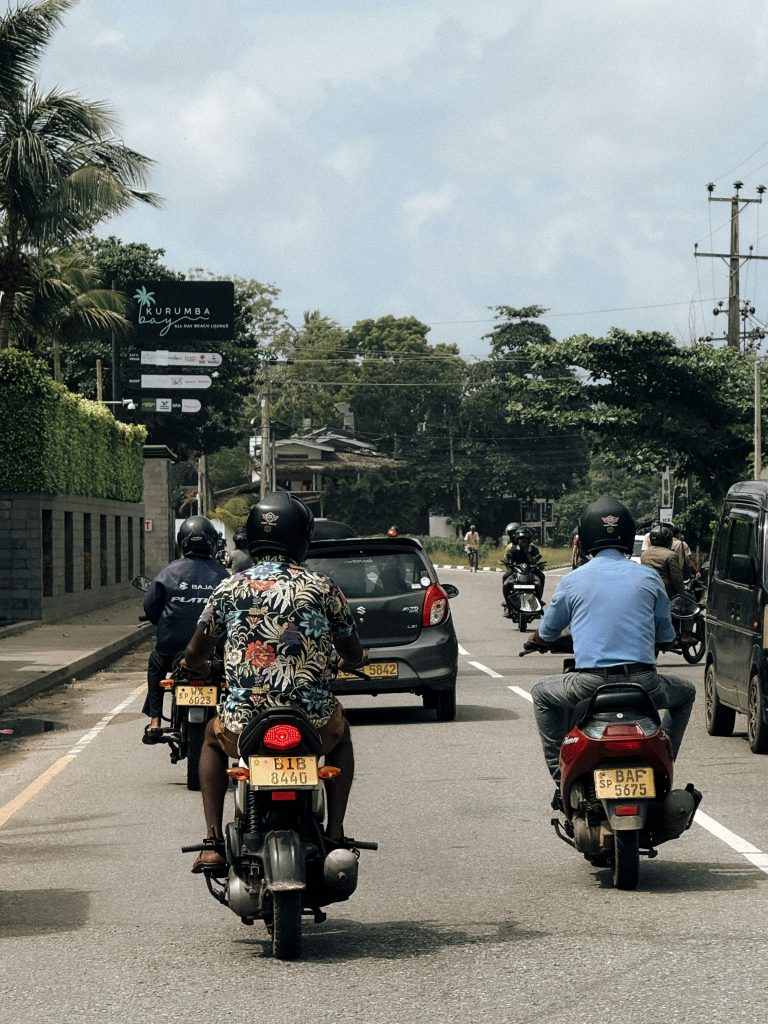
- Keep valuables close: Although still infrequent, there have been increased reports of low-level opportunistic crime and bag snatches by riders on mopeds/motorbikes. Carry bags on the side away from the road and keep passports/money secured.
- “Helpful” strangers: Be mindful of any “helpful” strangers near stations/tourist sites, as while many may be genuine, this is also a common tactic to try and steer you toward overpriced rides or shopping stops (especially gem-related pitches).
- Harassment: Sri Lankan officials and advisories note sexual harassment can occur, including on public transport and in crowded areas. If anyone makes you uncomfortable, change vehicles/leave the situation and get help.
Safety Tip: If something goes wrong police can be reached on emergency number 119. Otherwise, for 24/7 general emergency support for tourists call the number 1912.
Families, Luggage + Surfboards
Luggage + Heat + Waiting
- Buses and trains are easier with less luggage. If you’re carrying big suitcases, plan for slower boarding and limited space.
- Heat management matters: pack water, snacks, wipes, and a “one bag” day kit you can grab quickly while your main luggage stays stowed.
- If you’re doing a long transfer day (like Ella to South Coast), a driver often saves the day: fewer transfers, fewer queues, and a predictable arrival time.
Tip: For train days, keep passports, cash, meds, and chargers in a small daypack you never take off – even when your main bag is on the rack.
Kids: Naps, Toilets, Snacks (When a Driver is Worth It)
- If your day hinges on nap timing, toilets, or avoiding queues, drivers win (door-to-door, breaks when you need them).
- If using public transport, aim for morning departures when everyone’s fresher and crowds are often more manageable.
- Watch out: Crime (including harassment), while infrequent, can occur. For families, that should generally mean – stick together, keep kids close in crowds, and choose reputable transport providers.
Surfboards / Large Gear: Pick the Right Mode
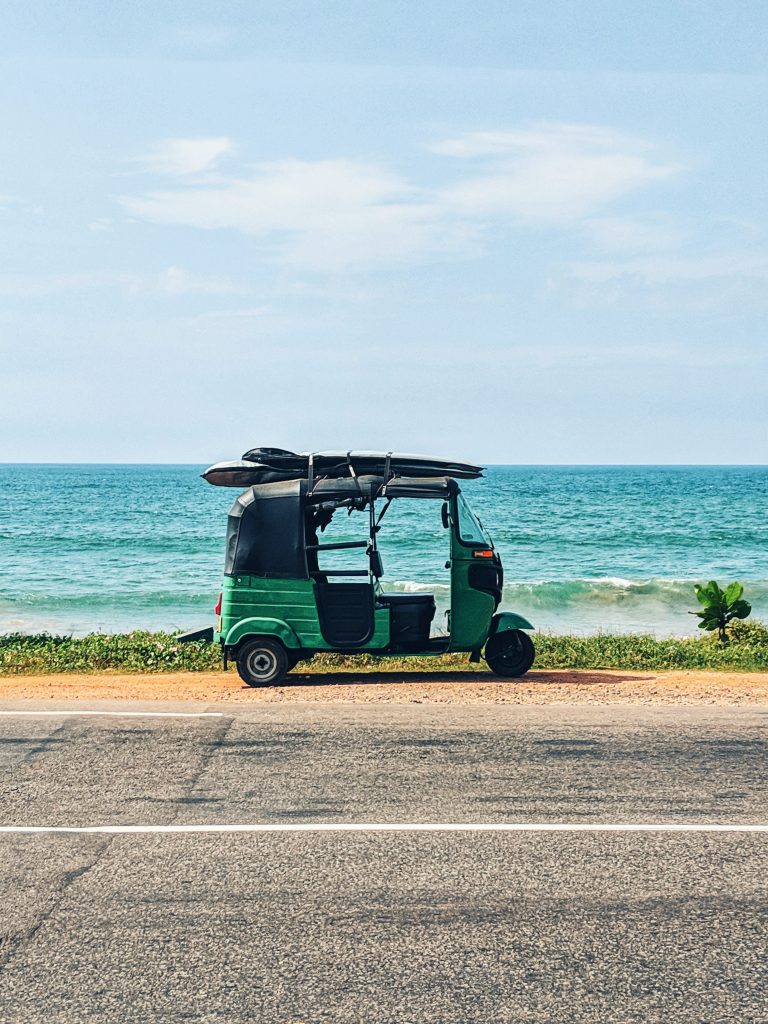
- Drivers/vans are the simplest option for surfboards or bulky luggage (space + fewer hands-on transfers).
- If you’re renting boards, be wary of scams where renters are blamed for damage and charged high repair fees – take timestamped photos/videos of the board before and after use.
Final Thoughts
Sri Lanka may be a small island nation, but there is plenty to consider when it comes to getting around. If you want the easiest plug-and-play version of this guide, bookmark this page and build your trip around the route cards above – then upgrade only the legs that would otherwise drain your energy (usually Ella to South Coast and airport-day transfers).
Some links may earn us a commission at no extra cost to you.