If you’ve Googled surfing in Sri Lanka, you’ve probably seen two extremes: glossy photos of perfect waves… or technical surf blogs that make it feel intimidating if you’re not already confident on a board.
As someone who is keen to learn to surf, the real question I had wasn’t “Is Sri Lanka good for surfing?”
It was: “Is it good if you’re a beginner, travelling with kids, or just want to give surfing a go once or twice?”
That’s exactly what this guide is for.
This is not a hardcore surf manual. I won’t talk swell periods, reef mechanics, or tide windows – and not just because I don’t know about anything about them. Instead, I’ll walk through how beginner-friendly Sri Lanka really is, what it’s like learning to surf there, what families should expect going together, and whether it’s worth building into a normal holiday.
I’ll also be upfront about the trade-offs – crowds, lesson-based surfing, and when not to paddle out – so you can decide if Sri Lanka fits your style of travel, not someone else’s Instagram feed.
Is Sri Lanka a Good Destination for Beginner Surfers?
Short answer: yes – especially if you’re new to surfing.
What makes Sri Lanka stand out isn’t monster waves or elite surf culture. It’s how easy it is to get started
Here’s why beginners tend to do well:
- Consistent, manageable waves
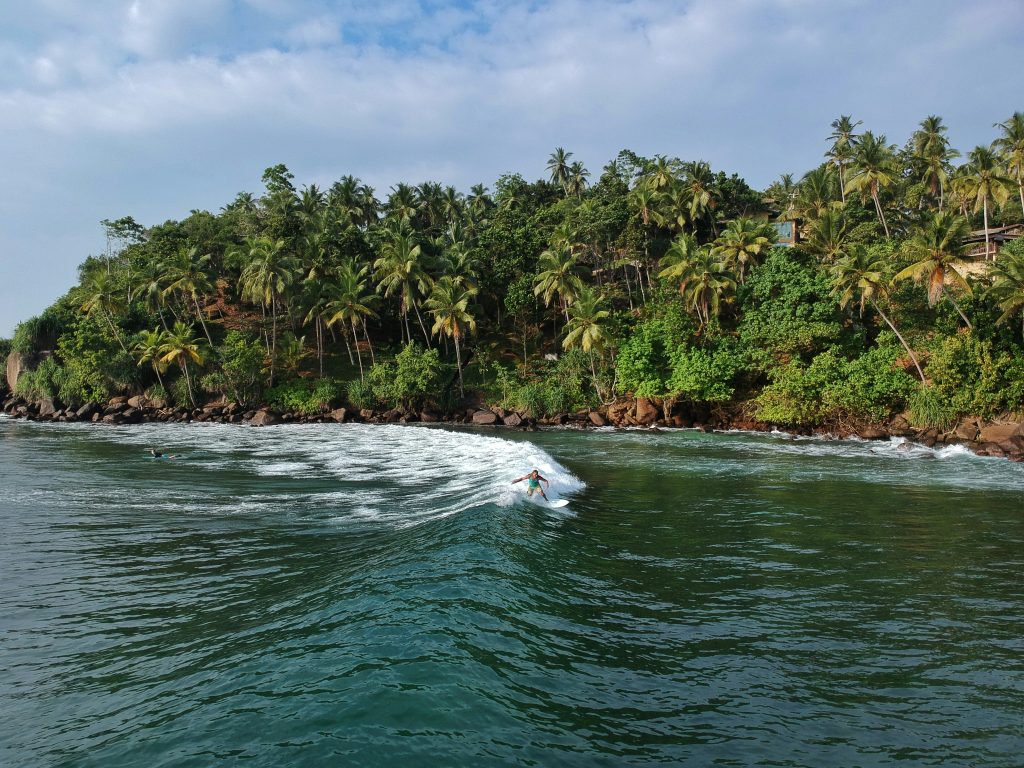
Many popular beaches (like Weligama on the south coast) have long, rolling waves that break gently over sand. That means fewer wipeouts and more chances to practice. - Affordable lessons everywhere
Surf schools line the beach. You don’t need to pre-book weeks ahead, and prices are far lower than Australia, Europe, or the US. - Warm water, year-round
No wetsuits. No booties. You paddle out in boardshorts or a rashie, which removes a lot of friction for first-timers. - Beginner-normalised culture
You won’t feel out of place. Most people in the water are learning, taking lessons, or surfing casually – not guarding secret spots.
Tip: If you’ve never surfed before, start with a lesson, even if you’re confident in the ocean. Instructors here act like traffic controllers, keeping things safe and calm.
For most travellers, surfing in Sri Lanka isn’t about becoming “a surfer.” It’s about trying something new in a low-pressure setting – and enjoying it enough to go back for a second lesson.
If you’re budgeting your trip, lesson prices and board hire are covered in detail here:
Cost to Visit Sri Lanka
Best Time of Year to Surf in Sri Lanka (A Simple Breakdown)
Sri Lanka has two surf seasons – and this is where many people get confused. The key thing to know is that you don’t surf the whole island at once.
Here’s the simple version:
South & West Coast (Beginner-friendly)
Best months: November to April
- Calm seas
- Reliable, smaller waves
- Most lessons run during this window
- Popular spots: Weligama, Mirissa, Ahangama
This is when most first-timers surf – often alongside a wider holiday that includes beaches, wildlife, and culture.
East Coast (More advanced)
Best months: May to September
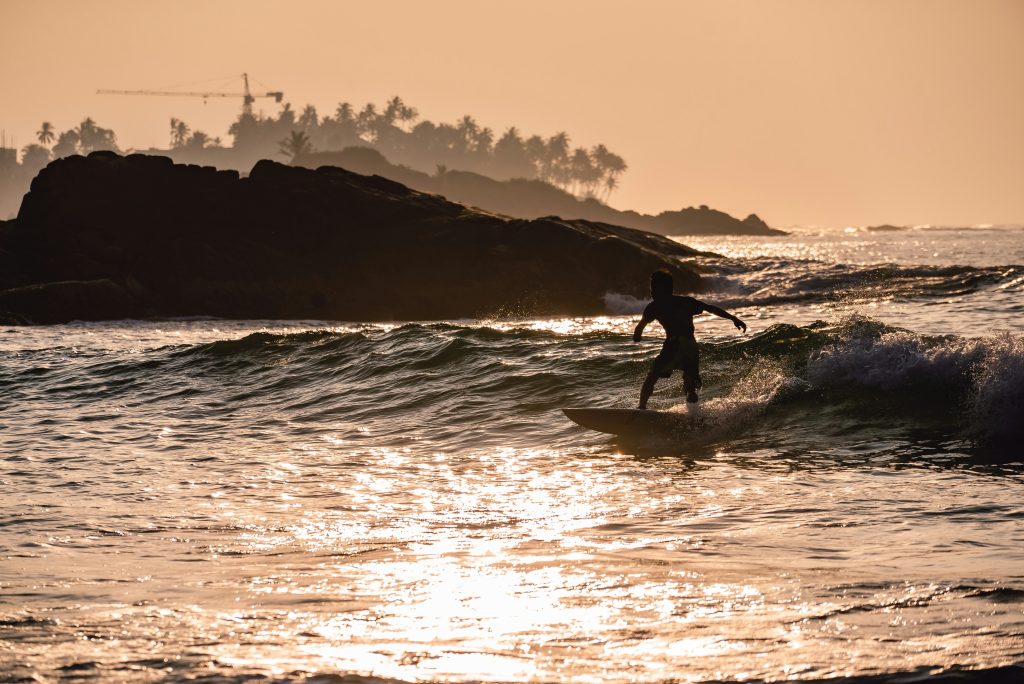
- Bigger, faster waves
- Stronger currents
- Fewer beginner beaches
- Arugam Bay is the main hub
If you’re learning to surf or travelling with kids, the south coast season is the safer, easier choice.
Warning: During monsoon months on each coast, swimming and surfing can be unsafe due to strong currents and rough seas. Always check local conditions before paddling out. On my second trip to Sri Lanka (in the month of August) we stayed in Weligama for almost a week and I had hoped to do a surf lesson – instead, I saw them get cancelled regularly due to the rough conditions of the surf.
I’ll avoid overcomplicating this with swell charts or tide talk because most travellers don’t need it. If you’re planning a general holiday and want to add surfing – just match your coast to the season and you’ll be fine.
For a broader planning view, see: The Best Time to Visit Sri Lanka
Where Most Visitors Go Surfing (Beginner-Friendly Overview)
Most travellers don’t bounce between ten different surf spots. In reality, nearly everyone ends up on one of two coasts, depending on experience and season.
South Coast: where beginners start
Weligama and Mirissa are the centre of gravity for beginner surfing in Sri Lanka – and that’s no accident:
- Soft sand beaches (no sharp reefs)
- Long, slow-breaking waves
- Surf schools every 50-100 metres
- Shallow water where instructors can stand beside you
The vibe is very lesson-based. Many people surf once in the morning, then head off for sightseeing, cafes, or a beach nap. You won’t feel pressure to “perform” or keep up.
Tip: If you want fewer crowds, surf early (around 6-8am). By mid-morning, lessons stack up and the water gets busy.
East Coast: for confident surfers
Arugam Bay is Sri Lanka’s most famous surf town – and while it can work for beginners, it’s not necessarily aimed at beginners.
- Waves are faster and more powerful
- Reef breaks are common
- Fewer true beginner beaches
- Better suited to people who already surf independently
This is a helpful summary of my research:
South coast = learning and casual fun. East coast = surfing as the main event.
Surfing in Sri Lanka With Kids or Teens
This is where Sri Lanka really surprised me – it’s a really family-friendly place for learning to surf.
Most surf schools are used to working with kids and teens, especially on the south coast.
What ages can surf?
- Teens (10-12+): Usually fine for standard beginner lessons
- Younger kids: Often accepted for short, one-on-one sessions
(Final decision generally depends on confidence and swimming ability)
Lessons are typically flexible. Instructors adjust wave size, depth, and session length rather than pushing kids beyond their comfort zone.
Why it works well for families
- Soft sand beaches
Falls are far less intimidating than rocky or reef breaks. - Short lesson durations
Most beginner lessons run 60-90 minutes – ideal for attention spans (and less swim fit folks like me). - Hands-on instruction
Instructors often stay physically close, holding boards and guiding positioning. - Warm water
No wetsuits means fewer complaints and easier logistics.
Tip: Ask for a private lesson for kids or teens. It costs a little more but gives better supervision and faster confidence-building.
Safety considerations for parents
- Always confirm lessons run at beach breaks, not reef breaks
- Avoid afternoons if conditions look choppy
- Skip surfing entirely during rough monsoon days
- Stay nearby – most beaches have cafes right on the sand
Surfing here doesn’t have to be a full-day commitment. For many families, it becomes a “highlight activity” rather than the centre of the trip.
If you’re travelling with younger children, this guide may help with broader planning: Sri Lanka with Kids
How Much Does Surfing in Sri Lanka Cost?
One of the biggest reasons people try surfing in Sri Lanka is the price. Compared to Australia, Europe, or the US, it’s simply far more accessible – especially if you’re just testing the waters.
Here are the realistic, on-the-ground ranges travellers can expect to pay on the South Coast (though note that prices may vary):
Beginner surf lessons
- Group lesson: USD $15-25 per person
- Private lesson: USD $30-45 per person
Most lessons include:
- Board hire
- Rash vest
- Instructor in the water with you
- Basic safety briefing
You usually don’t need to book far ahead. As I mentioned, on that second trip to Sri Lanka it was as convenient as enquiring about a lesson that day.
Surfboard hire (no lesson)
- Per half hour: USD $5-10 per hour
- Per half day: USD $10-15 for half a day
This only makes sense if you’re already confident. Beginners are far better off with a lesson.
Multi-day packages
Many surf schools offer discounts if you commit to a few days:
- 3-5 lesson packages: often 10-20% cheaper overall
- Some include video feedback or transport
Tip: Don’t overcommit on day one. Try a single lesson first, then decide if your body (and motivation) wants more.
Prices fluctuate with season and demand, so treat these as guidelines rather than guarantees. For a full trip budget context, see: Cost to Visit Sri Lanka
Is Surfing in Sri Lanka Safe for First-Timers?
For beginners, surfing in Sri Lanka is generally safe – when done the right way.
Most first-timers surf under instruction, on beaches chosen specifically for learning. That alone removes many of the common risks.
Here’s what helps keep it safe:
Instructors and supervision
- Instructors usually stay in the water, not on the beach
- They control when you paddle out and which waves you take
- They watch spacing to avoid board collisions
Beach breaks vs reef breaks
- Beginner areas: sand-bottom beach breaks
- Advanced areas: shallow reef breaks (less forgiving)
If you stick to beginner beaches like Weligama, you’re surfing over sand – not coral.
Tip: If you hear the word “reef” and you’re a beginner, walk away. There will always be another beach.
When not to surf
- During active monsoon conditions
- When red flags are flying
- If locals aren’t in the water
- If instructors advise against it
Strong currents can appear quickly during rough weather, even on normally calm beaches. Like I mentioned earlier, we were in Weligama during monsoon season and I got to witness first hand how quickly the water would turn rough.
Warning: Don’t assume calm weather means safe conditions. Always ask locals or instructors before paddling out.
What about sharks?
This question comes up a lot. Shark incidents involving surfers in Sri Lanka are extremely rare. I’ve never heard locals express concern, and it’s not something instructors seem to factor into safety planning.
Overall, if you follow local advice and start with lessons, surfing here is low-risk and beginner-friendly – especially compared to destinations with cold water, heavy crowds, or reef-only breaks.
Is Sri Lanka Worth Visiting Just for Surfing?
If surfing is your only goal – chasing uncrowded, high-performance waves every day – Sri Lanka probably isn’t the best standalone destination.
But if you’re a beginner, casual surfer, or family traveller, the answer shifts to a clear yes.
Personally, my goal is to work surfing into an existing planned trip and not the whole point of it (which was lucky given my last attempt was foiled by rough seas)
Here’s why:
- You can surf in warm water without expensive gear
- Lessons are easy to arrange and genuinely affordable
- You don’t need to commit weeks to “surf progression”
- You can surf in the morning and do something completely different by lunch
That balance is the magic. One day you’re learning to stand up on a board. The next you’re exploring temples, spotting wildlife, or eating some of the best food in South Asia.
If you like the idea of:
- Trying surfing without pressure
- Sharing the experience with kids or a partner
- Combining beach time with culture and nature
…then Sri Lanka punches well above its weight.
Final Thoughts & Planning Your Trip
Surfing in Sri Lanka isn’t about being the best in the lineup. It’s about accessibility – to waves, to lessons, and to an experience that doesn’t feel intimidating or expensive.
That’s why I recommend it to:
- First-time surfers
- Families with kids or teens
- Travellers who want variety, not obsession
If you’re planning a trip and wondering how surfing fits into a realistic, well-paced itinerary, start here: 10-Day Sri Lanka Itinerary
Some links may earn us a commission at no extra cost to you.